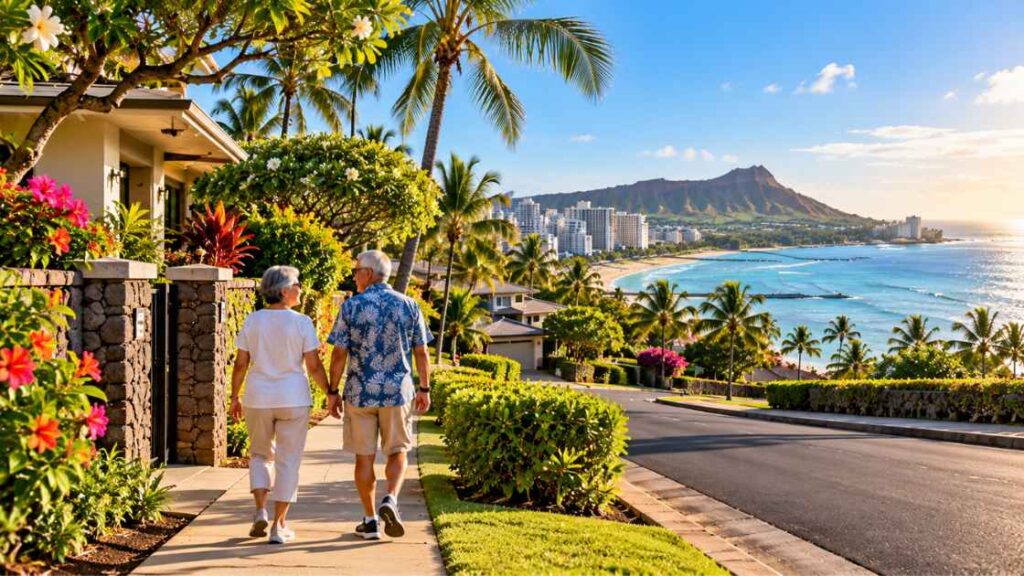
For some homebuyers, finding the right Honolulu neighborhood is about more than the size of the home or the number of bedrooms. Being able to walk to restaurants, coffee shops, grocery stores, parks, beaches, transit, and everyday services can make a significant difference in how a neighborhood feels and how you use your home.
Honolulu has several communities where daily destinations are relatively close together, although the experience varies considerably from one neighborhood to another. Kakaʻako, Waikīkī, Ala Moana, Downtown Honolulu, and parts of Kaimukī each offer different approaches to walkable living.
If you are considering buying a home in Honolulu, understanding what makes a neighborhood genuinely convenient on foot can help you narrow your search and choose a location that fits your lifestyle.

What Makes a Honolulu Neighborhood Walkable?
Walkability is more than simply having sidewalks.
A neighborhood is generally more convenient for walking when everyday destinations are close together and connected by streets, sidewalks, crossings, paths, and other pedestrian infrastructure.
For homebuyers, useful factors to consider include:
- Distance to restaurants and coffee shops
- Access to grocery stores and everyday services
- Sidewalk and crosswalk availability
- Access to parks and recreational areas
- Proximity to beaches or waterfront areas
- Public transportation options
- Street connectivity
- Traffic conditions
- Parking requirements
- Terrain and elevation
- Distance to work, school, or other regular destinations
Walkability is also highly personal. Someone who wants to walk to restaurants and entertainment may have different priorities from a buyer who wants to walk to a grocery store, school, park, or transit stop.
For that reason, the most walkable neighborhood for one buyer may not be the best choice for another.
1. Kakaʻako

Kakaʻako is one of the strongest options for buyers looking for an urban, pedestrian-oriented lifestyle in Honolulu.
The neighborhood combines residential towers, restaurants, retail, parks, offices, and other destinations within a relatively compact area. Crawford Pacific Realty already identifies Kakaʻako as an urban community with high-rise condominiums, parks, dining, art, and walkable living near downtown and Ala Moana.
The neighborhood’s pedestrian focus is also reflected in local planning. The Hawaiʻi Community Development Authority describes Kakaʻako’s redevelopment goals as creating a vibrant, pedestrian-oriented urban community, while its planning documents emphasize pedestrian connectivity and access.
Why homebuyers consider Kakaʻako
- High concentration of condominiums
- Restaurants and shops within the neighborhood
- Urban lifestyle
- Proximity to Downtown Honolulu
- Access to parks and waterfront areas
- Strong connection to Ala Moana
- Transit and future transportation considerations
Kakaʻako can be particularly attractive to buyers who prefer condominium living and want to reduce their dependence on a car for some daily activities.
What to consider
Urban convenience can come with trade-offs. Buyers should evaluate parking, monthly maintenance fees, building rules, traffic, noise, and the specific location of the condominium rather than assuming every property offers the same walking experience.
2. Waikīkī

Waikīkī is one of Honolulu’s most established pedestrian-oriented areas.
Restaurants, shops, hotels, beaches, entertainment, parks, and other destinations are concentrated throughout the neighborhood. The City and County of Honolulu also specifically recognizes Waikīkī as a district with significant pedestrian activity.
For buyers who want to live close to the beach while having many daily and recreational destinations within walking distance, Waikīkī can be an appealing option.
Why homebuyers consider Waikīkī
- Extensive dining options
- Easy access to Waikīkī Beach
- Shopping and entertainment
- Parks and recreational areas
- Condominium-focused housing
- Strong urban lifestyle
- Convenient access to many visitor and local amenities
Waikīkī can be particularly suitable for buyers who prioritize location and convenience over having a large yard or traditional single-family home.
What to consider
Not every part of Waikīkī offers the same experience. Buyers should look closely at the building, street, parking situation, noise levels, maintenance fees, ownership structure, and rental rules before purchasing a condominium.
If you are considering a condominium as an investment, those factors become even more important.
3. Ala Moana

Ala Moana is another strong option for buyers who want convenient access to shopping, dining, recreation, and nearby urban neighborhoods.
The area’s major destinations make it possible for some residents to handle many errands without driving. Its location between Waikīkī and other central Honolulu communities also makes it useful for buyers who want access to several parts of the city.
For a homebuyer, the appeal is not simply the ability to walk from one place to another. It is the combination of residential buildings, shopping, dining, recreation, transportation, and proximity to other major Honolulu destinations.
Why consider Ala Moana?
- Major shopping and dining destinations
- Close to Ala Moana Beach Park
- Convenient location between Waikīkī and central Honolulu
- Condominium and urban housing options
- Access to public transportation
- Good option for buyers who value convenience
As with Kakaʻako and Waikīkī, condominium buyers should evaluate the individual building rather than judging the entire neighborhood by its reputation.
4. Downtown Honolulu

Downtown Honolulu can appeal to buyers who prioritize proximity to workplaces, government offices, restaurants, services, and other urban destinations.
Honolulu’s broader pedestrian network planning identifies Downtown as one of the areas with existing pedestrian activity and includes connections between Downtown, Kakaʻako, Ala Moana, Waikīkī, and other destinations.
For professionals who work in or near Downtown, living nearby can potentially reduce commuting time and make walking part of their regular routine.
Why consider Downtown?
- Close to major employment centers
- Restaurants and services nearby
- Urban condominium options
- Convenient connection to surrounding neighborhoods
- Public transportation options
- Potentially shorter commutes for downtown workers
Downtown can feel very different from a residential neighborhood such as Kaimukī or Mānoa, so buyers should consider the atmosphere they want during evenings and weekends as well as their weekday commute.
5. Kaimukī

Kaimukī offers a different type of walkability.
Instead of the dense high-rise environment found in Kakaʻako or Waikīkī, Kaimukī combines established residential streets with locally oriented restaurants, cafés, boutiques, and neighborhood businesses.
Crawford Pacific Realty describes Kaimukī as a classic neighborhood with local eateries and boutiques, older single-family homes, and proximity to Waikīkī.
For buyers who want a more residential atmosphere while still having a neighborhood commercial area nearby, Kaimukī is worth considering.
Why consider Kaimukī?
- Established neighborhood character
- Local restaurants and cafés
- Mix of housing types
- Close to Waikīkī and Diamond Head
- More residential feel than some urban districts
- Strong connection to local businesses
Walkability can vary significantly within Kaimukī, particularly because of hills and differences between individual streets.
That means buyers should walk the actual area around a property before making a decision.
How to Compare Walkable Honolulu Neighborhoods
Rather than asking which neighborhood is simply “the most walkable,” consider what you actually want to walk to.
Walkability is also worth considering alongside Honolulu’s urban and suburban communities, as each area offers a different balance of convenience, housing options, amenities, and lifestyle. Some buyers may prefer a neighborhood where restaurants, shops, parks, and daily services are within an easy walk, while others may value a quieter residential setting with more space and access to major roads. Comparing these factors can help homebuyers identify a Honolulu neighborhood that fits both their daily routine and long-term housing goals.
If you want restaurants and entertainment
Kakaʻako, Waikīkī, Ala Moana, and parts of Kaimukī may be worth exploring.
If you want beach access
Waikīkī and Ala Moana offer particularly convenient access to coastal recreation.
If you want an urban condominium lifestyle
Kakaʻako, Waikīkī, Ala Moana, and Downtown Honolulu offer a range of condominium-focused options.
If you want a more residential neighborhood
Kaimukī may be a better fit than the denser urban districts.
If your priority is commuting
Look at the actual distance between the property, your workplace, transit options, and the destinations you visit most often.
The best choice depends on how you expect to use the neighborhood every day.
What Homebuyers Should Check Before Buying in a Walkable Neighborhood
A neighborhood can look walkable on a map but feel very different when you visit it.
Before purchasing, consider taking a walking tour around the property.
1. Walk to your everyday destinations
Try walking from the property to a grocery store, coffee shop, restaurant, park, or transit stop.
2. Check the sidewalks
Look at sidewalk continuity, crossings, street width, traffic, lighting, and pedestrian comfort.
3. Visit at different times
A neighborhood can feel completely different during weekday mornings, evenings, weekends, and peak traffic periods.
4. Consider parking
A walkable neighborhood does not necessarily mean you will not need a car.
If you own a vehicle, determine whether the property has dedicated parking and what parking costs.
5. Look beyond the immediate block
A property may be close to one restaurant but still be inconvenient for other daily needs.
Look at the wider neighborhood.
6. Evaluate the property itself
For condominiums, investigate maintenance fees, building rules, ownership structure, insurance considerations, and rental restrictions.
These factors can have a significant impact on the long-term cost and suitability of the property.
Is Walkability Important for Honolulu Homebuyers?
For many buyers, walkability is part of a broader lifestyle decision.
Some buyers want to reduce driving and have restaurants, stores, parks, and entertainment nearby. Others may prefer a larger home, private yard, more parking, or a quieter residential setting even if that means driving more often.
That is why walkability should be considered alongside:
- Purchase price
- Monthly housing costs
- Property type
- Parking
- Commute
- Schools and daily routines
- Neighborhood character
- Flood and coastal considerations
- Condo or homeowners association rules
- Long-term plans
Crawford Pacific Realty’s buying guidance also recommends considering factors such as maintenance fees, leasehold versus fee-simple ownership, flood and other hazard zones, and rental rules when evaluating Oʻahu properties.
Frequently Asked Questions
What are the most walkable neighborhoods in Honolulu?
Kakaʻako, Waikīkī, Ala Moana, Downtown Honolulu, and parts of Kaimukī can be attractive options for buyers who prioritize walking. The right neighborhood depends on which destinations you want to reach on foot and the type of home you want to purchase.
Is Kakaʻako a good neighborhood for walkable living?
Kakaʻako is particularly suited to buyers who want an urban lifestyle with condominiums, restaurants, parks, shopping, and other destinations nearby. Its planning and redevelopment have placed significant emphasis on pedestrian-oriented urban design.
Is Waikīkī a good place to live without driving every day?
For some residents, yes. Waikīkī has a high concentration of restaurants, shopping, recreation, beaches, and other destinations. However, whether you can comfortably live without a car depends on your workplace, lifestyle, and other regular travel needs.
What should I look for when buying a home in a walkable Honolulu neighborhood?
Look beyond the neighborhood name. Evaluate the actual property location, nearby destinations, sidewalks, crossings, traffic, parking, transit, housing costs, building rules, and your typical daily routine.
Final Thoughts
The most walkable neighborhoods in Honolulu are not necessarily the best neighborhoods for every homebuyer.
Kakaʻako may appeal to buyers who want modern condominium living and an urban environment. Waikīkī offers exceptional access to beaches, restaurants, entertainment, and recreation. Ala Moana provides convenient access to shopping and coastal amenities, while Downtown can be attractive for buyers who work in the urban core. Kaimukī offers a more established residential setting with local businesses and neighborhood character.
The best way to choose is to match the neighborhood to your actual lifestyle.
If you are considering buying a home in Honolulu, take the time to visit the neighborhoods, walk the streets, compare the properties, and evaluate what your everyday routine would look like there.
Crawford Pacific Realty works with buyers across Oʻahu and provides local guidance on neighborhoods, properties, and the home-buying process.