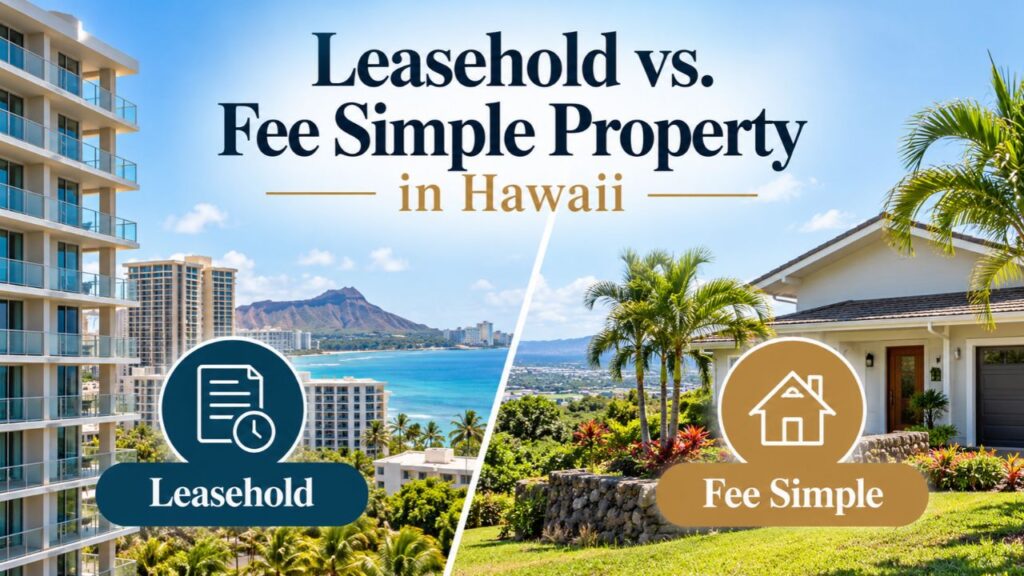
Buying property in Hawaii involves more than comparing locations, views, and purchase prices. One important detail buyers should understand is whether a property is fee simple or leasehold. These two ownership structures affect your rights to the property, ongoing costs, financing considerations, and long-term plans.
A leasehold property may have a lower purchase price than a comparable fee simple property, but the difference in price is only one part of the decision. Buyers also need to understand the lease term, ground rent, renewal provisions, and what happens when the lease expires.
Whether you are considering a condominium in Honolulu or a home elsewhere on Oʻahu, understanding leasehold vs. fee simple ownership in Hawaii can help you evaluate your options more carefully.
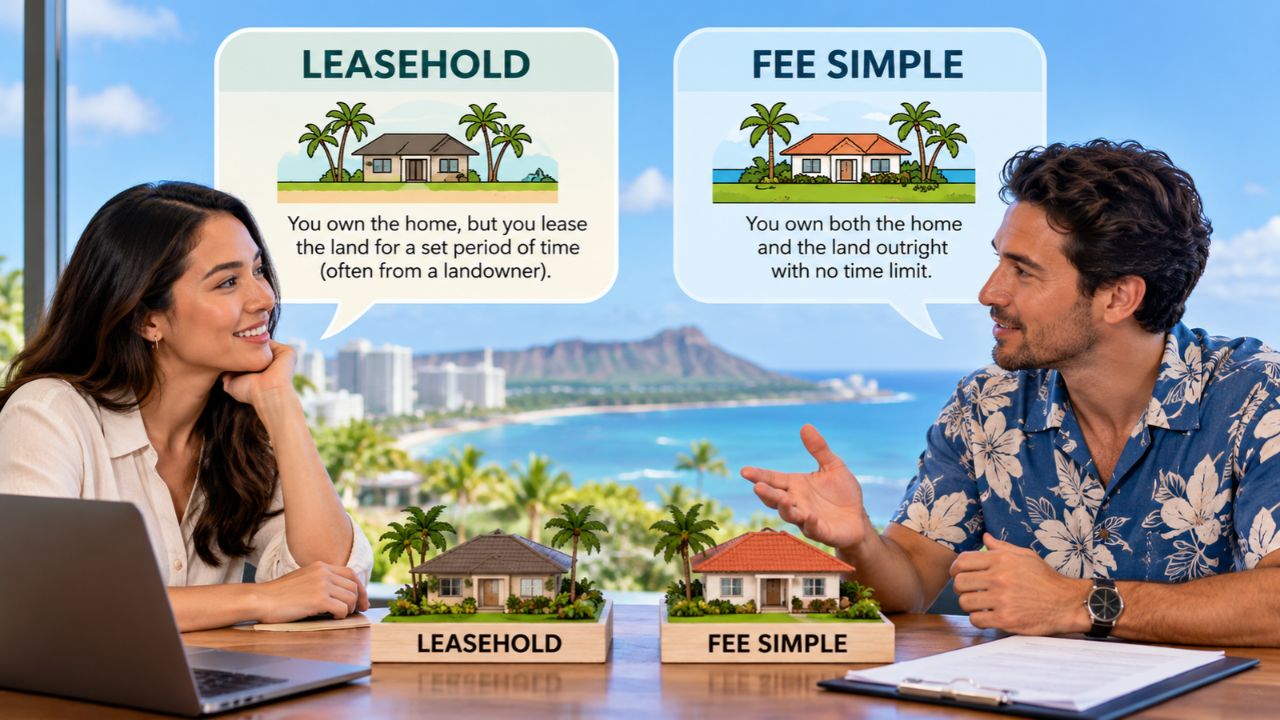
What Is Fee Simple Property in Hawaii?
Fee simple is a form of property ownership in which you own the property and the associated land interest, subject to applicable laws, recorded restrictions, easements, and other encumbrances.
For a single-family home, fee simple ownership generally includes both the house and the land on which it sits. For a fee simple condominium, ownership typically includes the individual unit and a legally defined interest in the condominium’s common elements and underlying land.
Fee simple ownership does not mean that you are exempt from property taxes, condominium association fees, maintenance expenses, or community rules. Those obligations depend on the property and its governing documents.
Benefits of Fee Simple Ownership
Long-term ownership: Fee simple ownership does not expire on a predetermined land-lease date. This can make long-term planning more straightforward.
No ground rent for the underlying land lease: Because the owner holds the relevant land interest, there is no separate ground rent under a leasehold arrangement. However, other property-related expenses still apply.
Potentially broader financing options: Some lenders may offer more financing options for fee simple properties, depending on the property’s condition, the borrower’s finances, and other underwriting requirements.
Greater flexibility for future plans: Owners can generally sell, transfer, or leave their property to heirs, subject to applicable laws and any restrictions affecting the property.
For buyers planning to remain in Hawaii for many years, fee simple ownership may offer a more straightforward ownership structure.
What Is Leasehold Property in Hawaii?
Leasehold property involves a different arrangement. The buyer acquires a defined interest in the property for the period and under the conditions established by a lease, while the underlying land is owned by a separate landowner.
In a residential leasehold arrangement, the buyer may own the dwelling or condominium unit while leasing the land beneath it. The precise ownership rights depend on the legal documents governing the property.
The lease establishes important conditions, including its expiration date, ground rent, rent-adjustment provisions, permitted uses, and any renewal or extension rights.
Why Are Some Leasehold Properties Less Expensive?
A leasehold property may have a lower initial purchase price because the buyer is not acquiring the same land ownership interest as a fee simple buyer.
However, the lower purchase price should not be evaluated in isolation. Buyers need to consider ground rent, potential rent adjustments, the remaining lease term, financing availability, and future resale prospects.
For example, two condominium units may appear similar in size and location, yet have substantially different asking prices because one is fee simple and the other is leasehold.
The price difference alone does not establish which property offers better value. The complete financial and legal arrangements matter.
Leasehold vs. Fee Simple: Key Differences
The following comparison highlights the main distinctions buyers should understand.
| Factor | Fee Simple | Leasehold |
|---|---|---|
| Land ownership | Includes the relevant land ownership interest | Underlying land is owned by a separate landowner |
| Ownership duration | No fixed lease-expiration date | Subject to the lease term |
| Ground rent | No ground rent under a land lease | Ground rent may be payable |
| Initial purchase price | May be higher for comparable properties | May be lower, depending on the property |
| Financing | Depends on property and borrower eligibility | May depend on remaining lease term and lease conditions |
| Resale | Not subject to a land-lease expiration | Resale may be affected by the remaining lease term and lease provisions |
| Lease expiration | Not applicable to the land ownership interest | Rights and obligations depend on the lease and applicable law |
Neither ownership structure automatically makes a property a good or bad investment. Buyers should evaluate the specific property, financial obligations, legal documents, and intended holding period.
How Does the Remaining Lease Term Affect a Property?
One of the most important considerations when evaluating a leasehold property is how much time remains on the lease.
A property with several decades remaining on its lease presents a different set of considerations from one approaching its expiration date. The remaining term may affect a buyer’s willingness to purchase, a lender’s financing requirements, and the property’s future marketability.
1. Mortgage Eligibility
Lenders establish their own requirements for leasehold financing. Some may require a minimum remaining lease term or examine the lease’s renewal and extension provisions.
A property that qualifies for financing with one lender may not meet another lender’s requirements.
Before making an offer, buyers should confirm financing eligibility directly with their lender. They should not assume that a property is mortgageable simply because it is listed for sale.
2. Future Resale Considerations
A future buyer may evaluate the same lease details you are reviewing today.
As the lease term shortens, the property’s appeal may change for buyers who need mortgage financing or want to hold the property for many years. These factors can influence demand and resale value, although the effect varies by property and market conditions.
Buyers should consider their likely ownership period and the number of years that would remain on the lease when they expect to sell.
3. Lease Renewal and Extension Provisions
Some leases contain renewal or extension provisions, while others may not provide an equivalent right. The availability and terms of any extension must be verified in the actual lease.
Do not assume that the landowner will renew the lease, that an extension will be affordable, or that the lease can be converted to fee simple ownership.
If the lease is approaching expiration, obtain qualified legal advice about the rights and obligations that apply to that particular property.
What Happens When a Leasehold Property’s Lease Expires?
Lease expiration is a major consideration when purchasing leasehold real estate in Hawaii.
The outcome depends on the lease terms, the nature of the ownership interest, and applicable law. The lease may specify what happens to improvements, the dwelling, or other property interests when the term ends.
Buyers should not assume that they will automatically retain the property, receive compensation, obtain a renewal, or be able to purchase the land.
Before purchasing, review the expiration provisions carefully and seek advice from a Hawaii real estate attorney when necessary.
The Hawaii Housing Finance and Development Corporation’s Residential Leasehold Program provides information about certain state-administered leasehold properties and illustrates why the terms of an individual lease matter.
What Should Buyers Check Before Purchasing a Leasehold Property?
A leasehold property can suit some buyers, but it requires careful due diligence. Before making a purchase decision, review the following details.
1. The Original Lease and Expiration Date
Confirm the start date, expiration date, remaining term, and any applicable extension provisions. Make sure the information matches the property documents and disclosures.
2. Current Ground Rent
Find out how much ground rent is payable, when it is due, and whether other lease-related charges apply.
Include these expenses when estimating the total cost of ownership.
3. Ground Rent Adjustment Provisions
Read the lease to understand when rent can change and how future adjustments are calculated. If a rent adjustment or renegotiation is approaching, investigate the possible financial implications before committing to the purchase.
Do not assume that current ground rent will remain unchanged throughout the lease.
4. Financing Requirements
Speak with a mortgage lender who understands Hawaii leasehold transactions. Ask whether the lender will finance the specific property, what minimum lease term applies, and whether the lease’s provisions affect loan eligibility.
5. Resale Restrictions and Transfer Conditions
Check whether the lease or other governing documents impose restrictions on transfers, subleasing, alterations, or other activities. Confirm whether the landowner’s consent is required for particular transactions.
6. Conversion Options
Some properties may have an opportunity to convert from leasehold to fee simple ownership, but this is not guaranteed.
Confirm whether a conversion program exists for the particular property, who is eligible, whether the land interest is available for purchase, and what the cost and conditions would be.
7. Total Ownership Costs
Compare the purchase price with ground rent, property taxes, insurance, maintenance, association dues, and other applicable expenses.
A lower purchase price does not necessarily mean a lower total cost over your intended ownership period.
Is Fee Simple or Leasehold Better for Buying Property on Oʻahu?
The right choice depends on your finances, intended ownership period, risk tolerance, and the specific property.
When Fee Simple May Be Worth Considering
Fee simple may be suitable for buyers who:
- Want to own the associated land interest.
- Prefer not to have a fixed land-lease expiration date.
- Plan to hold the property for a long period.
- Want to evaluate financing and resale without the additional considerations of a land lease.
These preferences do not guarantee a better financial outcome, and fee simple properties still require the usual property, financial, and legal due diligence.
When Leasehold May Be Worth Considering
Leasehold may be worth evaluating for buyers who:
- Have a specific property in mind with a lower initial purchase price.
- Understand the ground rent and lease provisions.
- Have confirmed that their intended financing is available.
- Are comfortable with the remaining lease term and its implications.
- Have reviewed the potential resale and expiration scenarios.
Leasehold ownership should be evaluated on its actual terms rather than rejected or accepted solely because of its label.
Compare the Full Financial Picture
Before deciding, compare properties with similar locations, sizes, conditions, and amenities. Review the purchase price, recurring expenses, remaining lease term, financing conditions, and expected holding period.
If you are considering buying a home or condominium on Oʻahu, Crawford Pacific Realty can be a starting point for exploring available properties and discussing your buying requirements. Visit the Crawford Pacific Realty buying page to learn more.
Frequently Asked Questions
Is fee simple better than leasehold in Hawaii?
Neither option is automatically better for every buyer. Fee simple provides the relevant land ownership interest without a fixed land-lease expiration date. Leasehold may offer a lower initial purchase price but involves additional considerations, including ground rent and the remaining lease term.
Why are leasehold properties often cheaper in Hawaii?
Leasehold properties may cost less because the buyer is not acquiring the same land ownership interest as a fee simple buyer. The price also reflects factors such as the remaining lease term, ground rent, financing availability, and market demand.
Can you get a mortgage on a leasehold property in Hawaii?
Potentially, yes. Financing depends on the lender’s requirements, the remaining lease term, the lease provisions, the property, and the borrower’s financial qualifications. Buyers should confirm eligibility with their lender before making an offer.
Can a leasehold property become fee simple?
Some leasehold properties may offer a way to purchase the underlying land interest, but conversion is not available for every property. Buyers must verify eligibility, availability, cost, and applicable restrictions.
What happens when a leasehold lease expires in Hawaii?
The outcome depends on the lease and applicable law. The buyer should review the contract to determine what happens to the dwelling, improvements, and ownership rights at expiration. Legal advice may be appropriate for a specific transaction.
Should first-time buyers consider leasehold property?
First-time buyers can consider leasehold properties, but they should understand the lease term, ground rent, financing conditions, and future resale implications before proceeding. Comparing the full cost of ownership against suitable fee simple alternatives can help inform the decision.
Final Thoughts
Understanding the difference between leasehold and fee simple property in Hawaii is an important step toward making an informed real estate decision.
Fee simple ownership includes the relevant land ownership interest and does not have a fixed land-lease expiration date. Leasehold ownership is governed by a lease that can affect ongoing costs, financing, resale, and the rights available when the lease expires.
Before purchasing either type of property, review the applicable documents, compare total ownership costs, and seek professional advice where necessary. For leasehold properties in particular, the details of the individual lease are essential.
If you are preparing to buy property on Oʻahu, connect with Crawford Pacific Realty’s buying services to begin evaluating your options.
This article is for general educational purposes only and is not legal, tax, mortgage, or investment advice. Property rights and obligations depend on the specific documents and applicable law. Consult qualified professionals before making a real estate decision.