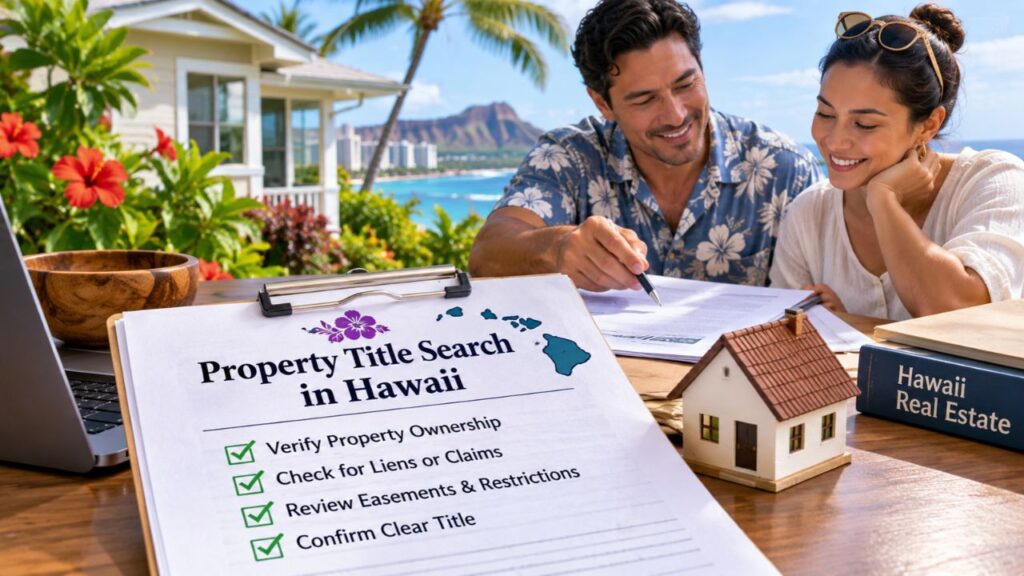
Buying a property in Hawaii involves more than choosing the right location, evaluating the asking price, or arranging financing. Buyers should also understand the property’s ownership history and review any recorded interests or restrictions that could affect their purchase.
A property title search in Hawaii helps uncover important information about a property’s ownership and recorded documents. It can reveal details about previous ownership transfers, mortgages, liens, easements, and other recorded interests that may affect how a property can be owned or used.
Hawaii has a unique land-recording system that includes both the Regular System and the Land Court System. Understanding how these systems work and knowing which records to review can help buyers make more informed decisions before completing a real estate transaction.
Whether you are purchasing a condominium in Honolulu, a single-family home on Oahu, or an investment property elsewhere in Hawaii, understanding property title records is an important part of the buying process.
For buyers who are still evaluating condominium properties, our guide on what to check before buying a condo in Oʻahu also covers other important property-related considerations.
What Is a Property Title Search in Hawaii?
A property title search is a review of public records to examine a property’s ownership information and identify recorded documents or interests that may affect its title.
In Hawaii, the Bureau of Conveyances, operated by the Department of Land and Natural Resources (DLNR), maintains official records relating to real property ownership and recorded transactions.
These records can include:
- Deeds and ownership transfers
- Mortgages and mortgage releases
- Recorded liens and judgments
- Easements and property access rights
- Land Court documents and certificates of title
- Other recorded agreements and restrictions affecting property ownership
A title search helps identify information that buyers, real estate professionals, title companies, escrow professionals, and attorneys may need to review during a property transaction.
It is important to understand that accessing public property records is not necessarily the same as completing a professional title examination. A title company or qualified attorney can review the relevant records, examine potential title concerns, and help determine whether additional documentation or action is required.
Why Is a Property Title Search Important Before Buying a Home?
A property’s physical condition does not always reveal everything a buyer needs to know about its ownership or legal status.
A home may look well-maintained and ready for occupancy, but its recorded documents could contain information that requires further investigation.
Reviewing property title information can help buyers identify several important issues.
1. Confirming Property Ownership
One of the first things buyers should verify is whether the person or entity selling the property has the legal ownership interest necessary to complete the transaction.
Ownership records can help establish:
- The name of the current recorded owner.
- Whether the property is individually or jointly owned.
- Whether a trust, corporation, or other entity holds an ownership interest.
- Whether the ownership information is consistent with the proposed purchase documents.
If there are differences between the seller’s information and the recorded ownership details, the matter should be investigated before closing.
2. Identifying Outstanding Mortgages and Liens
Recorded mortgages and liens are important considerations when reviewing property records.
For example, a seller may have an outstanding mortgage that must be paid off as part of the sale. Other recorded claims may also require attention before ownership can be transferred.
Buyers should understand:
- Whether mortgages have been recorded against the property.
- Whether a mortgage release has been recorded after repayment.
- Whether there are recorded tax or judgment liens.
- Whether any outstanding claims require resolution before closing.
The existence of a recorded mortgage does not automatically mean a property cannot be sold. However, the appropriate parties must address the outstanding obligation and confirm the required release or other documentation.
3. Understanding Easements and Property Access Rights
An easement gives another party certain rights to use a portion of a property for a specified purpose.
For example, an easement may allow access for utility maintenance, drainage, or passage to another property.
Before purchasing a home, buyers should understand whether recorded easements affect the property and whether those rights could influence their intended use.
This can be particularly important when evaluating properties with shared access, unusual boundaries, or land that depends on an access easement.
4. Reviewing Property Restrictions
Some recorded documents contain restrictions that may affect how a property can be used.
These can include restrictive covenants, building setback requirements, access limitations, and other recorded conditions.
Buyers planning renovations, additions, or changes to a property’s use should investigate any relevant restrictions before making assumptions about what they can do with the property.
What Information Can a Hawaii Property Title Search Reveal?
A property title search can provide information about several aspects of ownership and recorded property interests.
| Information | Why Buyers Should Review It |
|---|---|
| Ownership records | Helps verify the recorded ownership interest |
| Previous deeds | Provides information about ownership transfers |
| Mortgages | Identifies recorded financing interests |
| Liens and judgments | Highlights recorded claims requiring investigation |
| Easements | Explains certain third-party property-use rights |
| Restrictive covenants | Identifies recorded limitations on property use |
| Legal property description | Helps identify the property being transferred |
| Land Court records | Provides information about registered property ownership |
The information available will depend on the property’s recording system, the documents recorded, and the scope of the title examination.
How to Check Property Ownership Records in Hawaii
Buyers can begin researching recorded property documents through the Hawaii Bureau of Conveyances.
The Bureau maintains records under the Regular System and Land Court System and provides online access to its document search and ordering services.
Here are some practical steps to understand the process.
Step 1: Identify the Property
Start with the property’s address and, where available, its Tax Map Key (TMK) or other identifying information.
Accurate property identification is important because similar street addresses or ownership names can create confusion when searching public records.
Step 2: Visit the Hawaii Bureau of Conveyances
The official Bureau of Conveyances website provides access to information about recorded property documents and online research services.
Website: https://dlnr.hawaii.gov/boc/
The Bureau’s online document search system allows registered users to search available records. Purchasing or downloading document copies may involve fees.
Step 3: Review Available Recorded Documents
Depending on the property and its recording system, relevant documents may include:
- Deeds
- Mortgage documents
- Mortgage releases
- Notices of liens
- Land Court orders
- Other recorded instruments affecting property ownership
Reviewing these documents can help establish what has been recorded in connection with the property.
Step 4: Understand the Property’s Recording System
Hawaii has two primary systems for recording and registering real property interests: the Regular System and the Land Court System.
Understanding which system applies is important when researching ownership records.
Step 5: Request Professional Title Review
Searching public records is only one part of the process. Buyers should work with the title or escrow company handling the transaction and consult a qualified real estate attorney when legal questions or title concerns arise.
A professional review can help identify missing documentation, unresolved claims, and other issues that may require attention before closing.
Understanding Hawaii’s Regular System and Land Court System
Hawaii has a distinctive real estate recording structure that buyers should understand when researching property ownership.
The two systems serve different purposes.
Regular System
The Regular System records real estate documents to provide public notice of transactions and interests affecting property.
Recorded documents can include deeds, mortgages, liens, and other instruments relating to ownership.
Under this system, buyers generally need to review the relevant recorded documents to establish the property’s ownership history and identify recorded interests.
Land Court System
The Land Court System is a registration system that provides state certification of property ownership.
Properties registered through Land Court have a Certificate of Title reflecting the registered ownership and applicable interests.
The distinction is important because the two systems handle evidence and registration of property ownership differently.
Some properties may also involve documents recorded in both systems, depending on their history and applicable requirements.
For buyers, identifying the property’s recording system helps determine which records and documents need to be reviewed during the transaction.
What Property Title Issues Should Buyers Look For?
During a property title search in Hawaii, certain issues may require additional investigation.
Outstanding Mortgages
An existing mortgage may appear in recorded property documents. Buyers should confirm how the mortgage will be paid off and released as part of the transaction.
Unreleased Liens
A lien may remain in public records even after an underlying obligation has been paid. Buyers should verify whether the appropriate release has been recorded.
Ownership Discrepancies
Differences in ownership names, legal entities, or recorded interests may require additional documentation before the transaction can proceed.
Easements and Access Rights
An easement may affect how certain portions of a property can be accessed or used. Buyers should understand its location and purpose.
Restrictive Covenants
Recorded restrictions may limit certain activities, improvements, or uses of a property. These should be reviewed in relation to the buyer’s plans.
Incomplete or Unclear Property Descriptions
The legal description should correspond to the property being purchased. Any inconsistencies should be investigated by the appropriate professionals.
Not every recorded exception is necessarily a problem. Some are common and may remain applicable after a sale. The important consideration is understanding their effect and determining whether they are acceptable for the intended purchase.
Property Title Search vs. Preliminary Title Report vs. Title Insurance
These three terms are related, but they do not mean the same thing.
| Term | What It Means |
|---|---|
| Property Title Search | Research of public records to examine ownership and recorded property interests |
| Preliminary Title Report | A report prepared by a title company summarizing its findings and identifying requirements, exceptions, and other matters relevant to issuing title insurance |
| Title Insurance | An insurance policy providing coverage for specified title risks, subject to its terms, conditions, and exclusions |
A preliminary title report commonly organizes information into three schedules.
Schedule A: Provides information about ownership, the estate or interest being insured, and other basic transaction details.
Schedule B: Lists exceptions and encumbrances, which may include easements, restrictions, mortgages, liens, and other recorded interests.
Schedule C: Contains the legal description of the property, information about the ownership derivation, and applicable appurtenant easements.
Buyers should carefully review the report and ask the title or escrow professional about any unfamiliar entries.
A preliminary title report is not itself a title insurance policy, and it does not guarantee that every possible title issue has been identified.
When Should Buyers Complete a Property Title Search?
Property title research should be addressed during the purchase process rather than left until the final stages of closing.
The purchase agreement, transaction timeline, and applicable contingencies determine when the relevant title documents are provided and reviewed.
Buyers should pay attention to the following stages:
- Before making an offer: Understand the property’s ownership information and investigate any known concerns where records are available.
- After entering into a purchase agreement: Review the title information and preliminary title report provided through the transaction.
- During the due diligence period: Raise questions about recorded exceptions, ownership discrepancies, liens, or other concerns with the appropriate professionals.
- Before closing: Confirm that required title conditions and outstanding matters have been addressed and that the transaction is ready to proceed.
The timing and requirements can vary depending on the transaction and purchase agreement.
How Can Real Estate Professionals Help Buyers Navigate Title Issues?
Purchasing property involves several professionals, each with a different responsibility.
A real estate agent can help buyers understand the purchase process, coordinate communication, identify questions that need attention, and connect them with the appropriate professionals.
Title companies and escrow professionals handle title research, transaction documentation, and applicable closing requirements. Attorneys can provide legal advice when ownership disputes, complex title issues, or other legal questions arise.
Working with the appropriate professionals helps buyers understand the information presented during a transaction and make informed decisions before completing their purchase.
If you are unfamiliar with the buying process or need help understanding the role of professional representation, read our guide on when to hire a real estate broker in Honolulu.
For buyers who need guidance throughout the property search, offer, and closing process, Crawford Pacific Realty also provides dedicated real estate buying services in Honolulu.
Buying Property in Hawaii? Get Professional Guidance
A property title search is an important part of understanding what you are purchasing. Reviewing ownership records, mortgages, liens, easements, and recorded restrictions can help buyers identify matters that deserve attention before closing.
Whether you are considering a home in Honolulu, a condominium in Oahu, or an investment property elsewhere in Hawaii, having the right real estate guidance can make the purchasing process easier to navigate.
Crawford Pacific Realty helps buyers navigate the Hawaii real estate market and understand the different considerations involved in purchasing property.
Planning to purchase property in Hawaii? Contact Crawford Pacific Realty to discuss your buying requirements and get guidance throughout your property search and purchase process.
Frequently Asked Questions
1. How do I perform a property title search in Hawaii?
You can begin by researching recorded property documents through the Hawaii Bureau of Conveyances. Its online document search system provides access to available records. For a complete title examination, buyers should work with a qualified title or escrow company.
2. Where can I find property ownership records in Hawaii?
The Hawaii Bureau of Conveyances maintains official recorded real estate documents. Buyers can use its online services to search available records and obtain copies of recorded documents.
3. Can I check whether a property has liens in Hawaii?
The Bureau of Conveyances provides access to recorded lien documents. However, buyers should ensure that any identified lien relates to the correct property and determine whether a release or other resolution has been recorded.
4. What is the difference between the Regular System and Land Court in Hawaii?
The Regular System provides public notice of recorded documents affecting real property, while the Land Court System provides state registration and certification of property ownership.
5. Does a property title search show previous owners?
A review of recorded deeds and other ownership documents can provide information about previous ownership transfers. The available history depends on the property’s recording system and the records examined.
6. Is a property title search the same as title insurance?
No. A property title search involves researching ownership records and recorded interests. Title insurance is an insurance policy that provides coverage for specified title risks, subject to its terms and exclusions.
7. Should buyers review a preliminary title report before closing?
Yes. Buyers should review the preliminary title report during the purchase process, ask questions about unfamiliar exceptions, and work with the title or escrow professional to understand matters requiring attention before closing.
Editorial Disclaimer
This article provides general educational information about Hawaii property records and real estate transactions. It is not legal, tax, or title advice. Buyers should consult a qualified title professional or real estate attorney regarding their individual circumstances.